
1Z0-1115-23 Online Practice Questions and Answers
Which type of traffic is NOT supported by the OCI-Azure Interconnect?
A. Traffic between an Azure VNet and peered OCI VCNs in different regions
B. Traffic between an on-premises network and Azure VNet through the OCI VCN
C. Traffic between an Azure VNet and an OCI VCN
D. Traffic between an Azure VNet and peered OCI VCNs in the same region
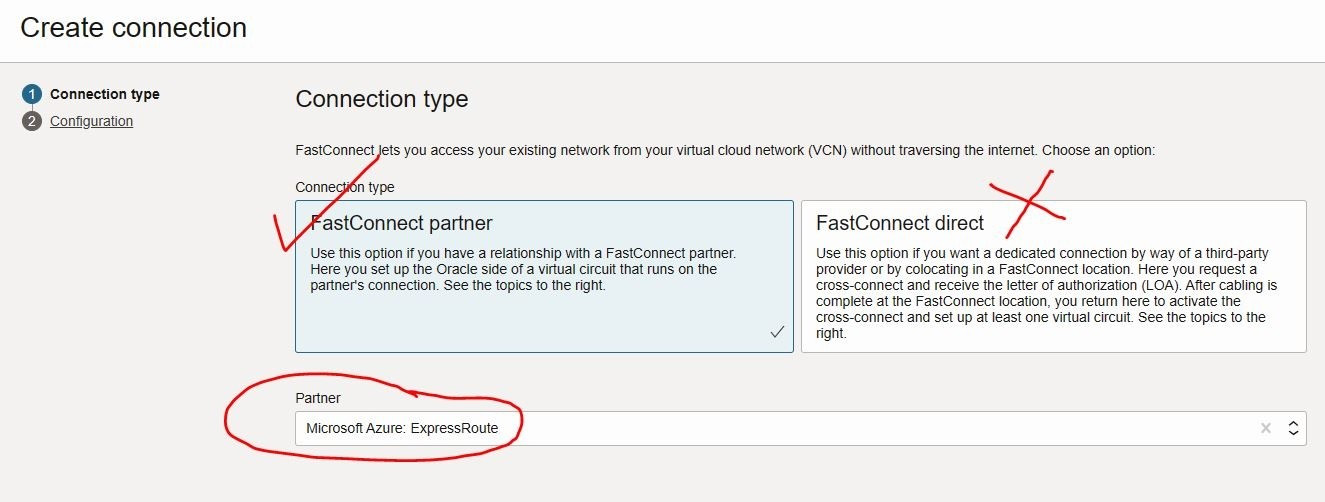
Which step is NOT valid while implementing an OCI-Azure Interconnect?
A. Set up an Oracle FastConnect virtual circuit.
B. Create a Dynamic Routing Gateway and attach it to the OCI VCN.
C. Select FastConnect Direct as the connection type.
D. Set up an Azure ExpressRoute circuit.
What is the primary Oracle Cloud Infrastructure region associated with an OCI account during Ora-cleDB for Azure setup?
A. The region specified during OracleDB for Azure onboarding
B. The region with the most available resources for OracleDB for Azure
C. The region with the lowest latency for Azure communication
D. The home region of the OCI account
What is the purpose of the SAML metadata file in the OCI Federation setup with Azure Active Di-rectory (AD)?
A. It is used to exchange metadata information between Azure AD and OCI.
B. It is used to configure attribute mapping between Azure AD and OCI.
C. It is used to establish trust between Azure AD and OCI.
D. It is used to store user credentials for authentication.
Which is NOT a security capability available with OracleDB for Azure?
A. IPsec tunnel
B. Encryption of data at rest and in transit
C. Automatic security updates for the database
D. Security features such as network isolation and access controls
What is the primary difference between using Oracle FastConnect with an Oracle partner and using FastConnect with colocation with Oracle?
A. The method of establishing the physical connection to Oracle Cloud Infrastructure
B. The number of available redundancy models
C. The type of virtual circuits supported
D. The geographical locations available for connections
What is the role of the Oracle Database Service enterprise application in OracleDB for Azure?
A. It allows you to add database compute servers and storage servers to your system at any time after provisioning.
B. It allows users to log in to the OCI Console with the same Azure credentials for Azure and the OracleDB for Azure portal.
C. It creates and manages resources in the Azure subscription, streams OCI Database metrics to Azure App Insights and events to Azure Log Analytics, and configures net-work settings in Azure so that Azure resources can access database resources in OCI.
D. It provides a distributed, scalable, shared-nothing, in-memory, hybrid columnar, query processing engine designed for extreme performance.
A company has deployed an application in Oracle Cloud Infrastructure consisting of multiple web servers, database servers, and application servers. The company wants to restrict communication be-tween these components, allowing only the necessary traffic between them. Which OCI feature would be most suitable to achieve this objective?
A. Use Virtual Cloud Networks to create isolated networks for each component.
B. Use Security Lists to configure network access rules for the entire Virtual Cloud Net- work.
C. Use Network Security Groups to apply specific firewall rules for each component.
D. Use Route Tables to define custom routing policies between each component.
Which database system is NOT available in Oracle Database Service for Azure?
A. Autonomous Database on shared Exadata infrastructure
B. Base Database using Oracle Enterprise Edition or Oracle Standard Edition 2 databases
C. Oracle Exadata Database
D. Autonomous Database on dedicated Exadata infrastructure
What should you do to prepare your Oracle Cloud Infrastructure (OCI) Virtual Cloud Network (VCN) for potential security risks when connected to a Microsoft Azure VNet?
A. Allow all traffic from the Azure VNet without restrictions.
B. Limit all inbound and outbound traffic from the Azure VNet to expected and well-defined traffic.
C. Remove all OCI security rules.
D. Disable the connection between Azure VNet and OCI VCN.