
1Z0-134 Online Practice Questions and Answers
Your WebLogic Server (WLS) environment consists of multiple domains. Which is a true statement about WLS domains? (Choose the best answer.)
A. Multiple domains can use the same or separate WLS installation while running on the same machine.
B. Domains require a minimum of one managed server.
C. Multiple domains require separate WLS installations while running on the same machine.
D. Multiple domains require individual Node Managers while running on the same machine.
E. Multiple domains can share the same administration server.
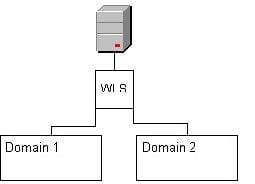
Examine the domain diagram:
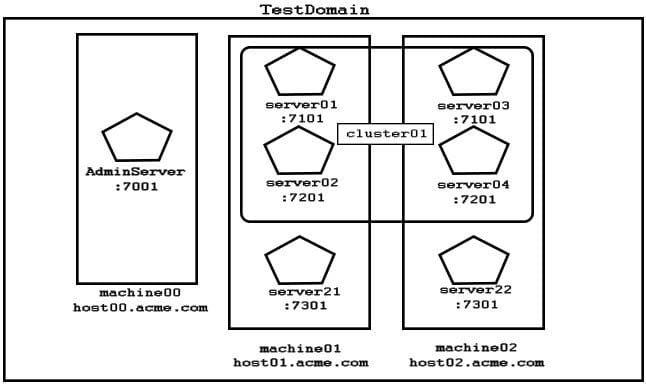
What is the correct path within the configuration hierarchy to the MBean that contains the log rotation parameters for server04? (Choose the best answer.)
A. /Servers/server04/Log/server04
B. /server04/log/rotation
C. /Cluster01/server04/log
D. /Machine02/server04/log
E. /Logs/server04
F. /TestDomain/server04/log
G. /server04/log
You are using the Domain Template Builder to create a new template using an existing domain as the source.
Which two directories are included by default? (Choose two.)
A. bin directory
B. lib directory
C. servers directory
D. common directory
E. logs directory
F. replication directory
You have a versioned application deployed in your production environment. You have been asked to troubleshoot why the most recent production redeployment appeared to allow the older version to retire too quickly.
In this case, the application had active RMI clients, but their subsequent calls were directed to the newer version immediately rather than waiting for the expected five minutes defined by the retirement timeout argument. The script command was:
java weblogic.Deployer –adminurl http://localhost:7001 –user weblogic -password Welcome1 –redeploy –name myDeployment -source /myDeployments/myApplication/appX -retiretimeout 300
You expected the older version to remain active (when there are active RMI clients) for five minutes after executing the production redeployment.
Which modification should have been made to this command to ensure the older version remains active? (Choose the best answer.)
A. java weblogic.Deployer –adminurl http://localhost:7001 –user weblogic -password Welcome1 –redeploy –name myDeployment -source /myDeployments/myApplication/appX -retiretimeout 300 –rmigraceperiod 300
B. java weblogic.Deployer –adminurl http://localhost:7001 –user weblogic -password Welcome1 –redeploy –name myDeployment -source /myDeployments/myApplication/appX -retiretimeout 300 -keepsessions
C. java weblogic.Deployer –adminurl http://localhost:7001 –user weblogic -password Welcome1 –redeploy –name myDeployment -source /myDeployments/myApplication/appX -retiretimeout 300 –timeout 300
D. java weblogic.Deployer –adminurl http://localhost:7001 –user weblogic -password Welcome1 –redeploy –name myDeployment -source /myDeployments/myApplication/appX -retiretimeout 300 –remote
You are managing a WebLogic domain that has the default built-in diagnostic module configured for each
server in the domain.
You have the following requirements:
You want to capture metrics that are not collected by any of the built-in diagnostic modules.
You want to continue capturing the metrics that are already captured by the existing built-in module.
You want your configuration to persist after the server is restarted.
What are two approaches you can apply to achieve this result? (Choose two.)
A. Clone the built-in module, add now metrics to it, deactivate the existing module, and activate your new module.
B. Leave the built-in module, create a new module and add metrics to it, and activate your new module alongside the built-in module.
C. Leave the built-in module, create an external resource descriptor module and add metrics to it, and activate your new module alongside the built-in module.
D. Remove the built-in module, create an external resource descriptor module and add built-in and new metrics to it, and activate your new module alongside the built-in module.
You are creating a new domain with WLST.
Identify three parameters that can be customized with the setOption command. (Choose three.)
A. the JDK that will be used to start the domain
B. the domain name
C. whether or not the domain will run in production mode
D. the default persistent store type for the domain
E. whether or not to automatically start the Node Manager
F. the default diagnostic profile for the domain
You are designing an application that uses JMS transactions to coordinate a group of messages for production and consumption, treating messages sent or received as an atomic unit.
What are two ways you can use transactions in JMS? (Choose two.)
A. You create a JMS-transacted session if you are using only JMS in your transactions.
B. You set various levels of control over message acknowledgement.
C. Use message-driven beans if consumers are nondurable.
D. Use a JTA user-transactions in a non-transacted JMS session.
I am sending a set of ten JMS messages. I want all of these messages to be sent successfully or none at all.
Which JMS Session feature is most suitable for implementing such a scenario? (Choose the best answer.)
A. Transacted Session
B. Unit of Order
C. Store and Forward
D. Persistent Session
E. Server affinity
What is the first action to take during a Rolling Update? (Choose the best answer.)
A. Change the Startup Mode to Development; Production Mode is not supported.
B. Remove all managed servers from any cluster and reassign them after the update.
C. Do a Force Shutdown of all the servers, including the Administration Server.
D. Back up your applications, database schema, other application data, and domains.
E. Stop all Node Managers that support the domain to be updated.
Examine the illustration: Which best describes the above illustration?
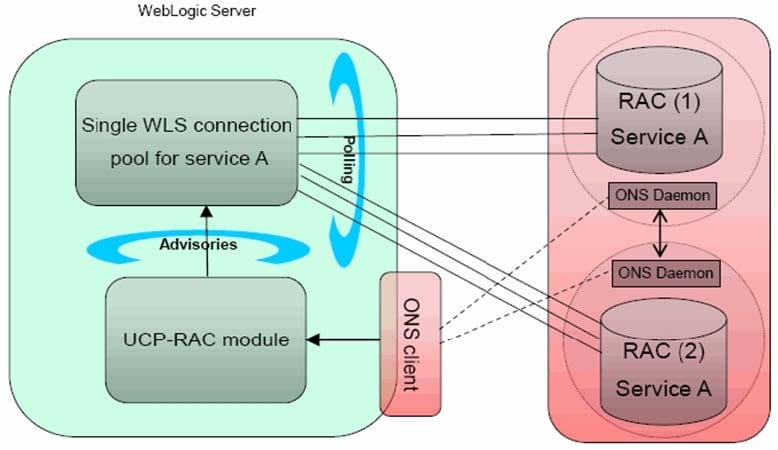
A. depicts an Active GridLink Data Source between WebLogic Server and an Oracle Database service that includes two RAC nodes
B. depicts a FAN-disabled Data Source between WebLogic Server and an Oracle Database service that includes two RAC nodes
C. depicts a Multi Data Source between WebLogic Server and an Oracle Database service that includes two RAC nodes
D. depicts a Data Source using SCAN between WebLogic Server and an Oracle Database service that includes two RAC nodes