
1Z0-811 Online Practice Questions and Answers
Given:
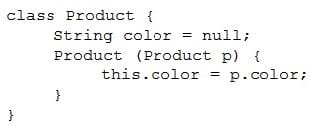
And the code fragment:

What is the result?
A. A compilation error occurs at line n1.
B. White : null
C. null: null
D. White : White
Given the code:
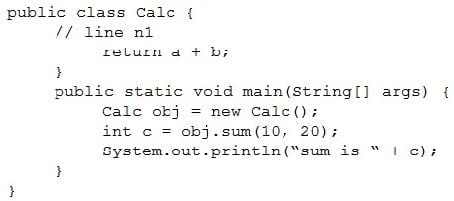
Which code fragment, when inserted at line n1, enables the code to print sum is 30?
A. int sum(int a, b) {
B. int sum(int a, int b) {
C. int sum(int, int) {
D. int sum(int[] a, b) {
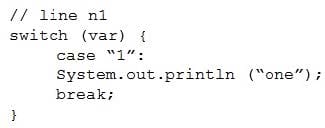
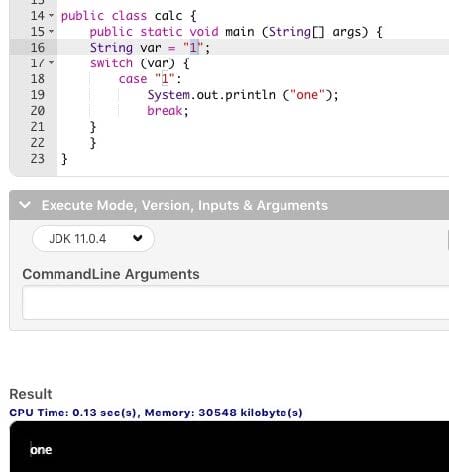
Given the code fragment: Which code fragment, when inserted at line n1, enables the code to print one?
A. char var = `1';
B. String var = "1";
C. int var = 1;
D. String var = 1;
Given:

What is the result?
A. The code fails to compile. To make it compile, at line n1 insert: this () { }
B. The code fails to compile. To make it compile, at line n2 insert: this ();
C. The code fails to compile. To make it compile, at line n1 insert: Bus () { }
D. The code compiles and prints: default
luxury


Which method identifier is correct according to Java naming conventions?
A. BillCalculator
B. calculateBill
C. calculatebill
D. Calculator
Given the code fragment:
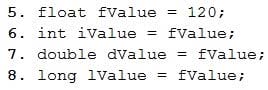
At which line does a compilation error occur?
A. lines 5 and 7
B. line 7
C. lines 6 and 8
D. line 5
Given the code fragment:
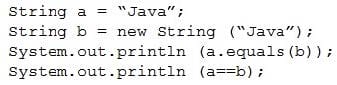
What is the result?
A. false false
B. true true
C. true false
D. false true
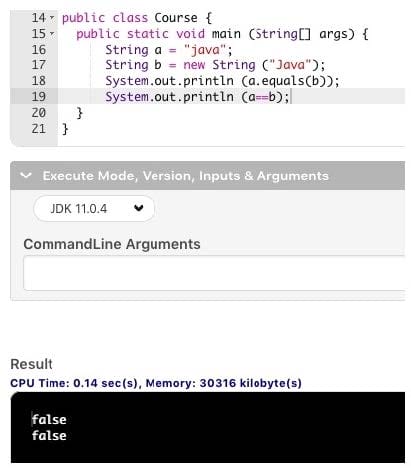
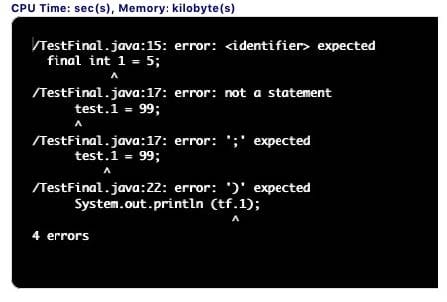
What does import java.io* mean?
A. Only the io class is imported.
B. All classes in the io package are imported.
C. All classes whose names start with io are imported.
D. All classes in the io package and the subpackages of io packages, if any, are imported.
Given:
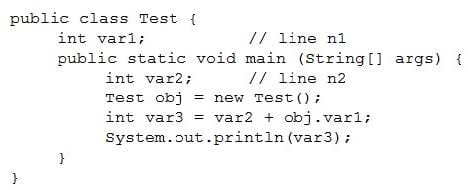
What is the result?
A. Compilation fails. To make it compile, replace line n1 with var1 = 0;
B. Compilation fails. To make it compile, replace line n2 with var2 = 0;
C. 0
D. Nothing is printed.
Given the code fragment:
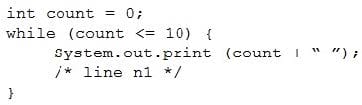
Which statement, when inserted at line n1, enables the code to print 0 2 4 6 8 10?
A. count = (count++) +1;
B. count = count++;
C. count =+ 2;
D. count += 2;