
MCD-LEVEL1-DELTA Online Practice Questions and Answers
What does to the attributes of a Mule event happen in a flow after an outbound HTTP Request is made?
A. Attributes do not change.
B. Previous attributes are passed unchanged.
C. Attributes are replaced with new attributes from the HTTP Request response.
D. New attributes may be added from the HTTP response headers, but no headers are ever removed.
The new RAML spec has been published to Anypoint Exchange with client credentials.
What is the next step to gain access to the API?
A. Email the owners of the API.
B. Create a new client application.
C. No additional steps needed.
D. Request access to the API in Anypoint Exchange.
How is policy defined in terms of classloader of an API?
A. Classloader isolation does not exist between the application, the runtime and connectors, and policies.
B. Classloader isolation exists between the application, the runtime and connectors, and policies.
C. None of these.
D. Classloader isolation partially exists between the application, the runtime and connectors, and policies.
A Scatter-Gather processes a number of separate HTTP requests. Each request returns a Mule event with a JSON payload.
What is the final output of the Scatter-Gather?
A. An Object containing all Mule event Objects.
B. An Array containing all Mule event Objects.
C. None of these.
D. The last Mule event object.
Refer to the exhibit.
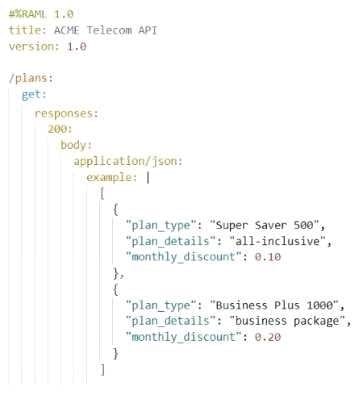
The API needs to be updated using the company-wide standard for the Plan data type. The Object data
type has already been published in Anypoint Exchange with the global reference .
ACME/DataTypes/PlanDataType.raml.
What is a valid RAML specification that reuses the Plan data type?
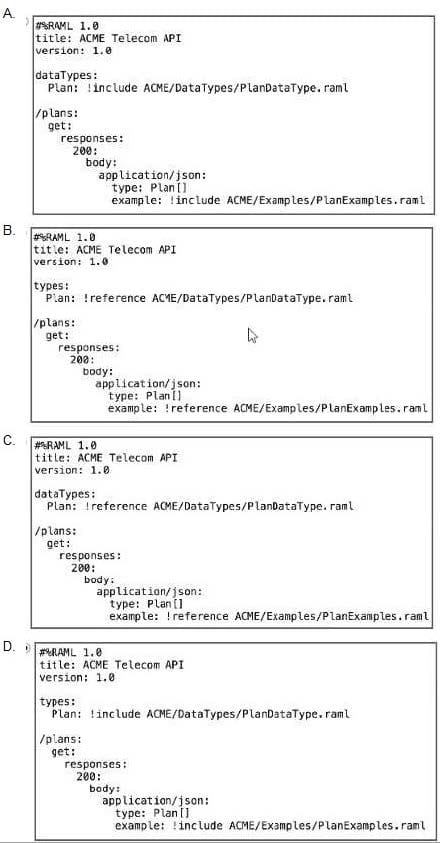
A. Option A
B. Option B
C. Option C
D. Option D
Refer to the exhibit.
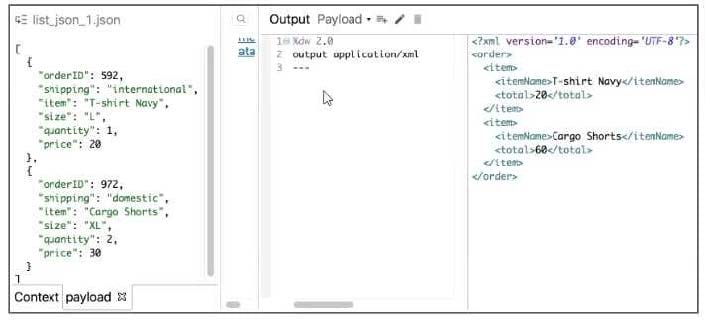
What Database expression transforms the input to the output?
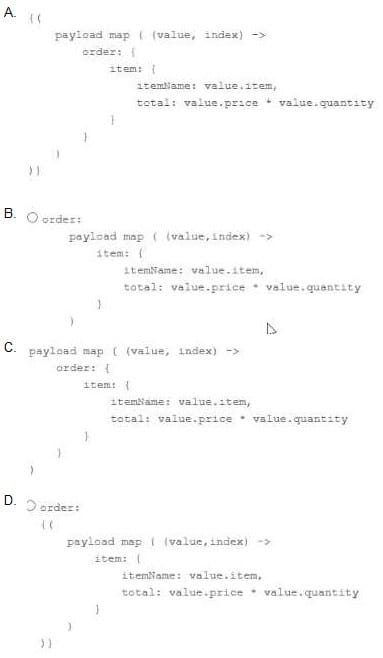
A. Option A
B. Option B
C. Option C
D. Option D
Refer to the exhibits.

A web client submits a request to http://localhQst:8081. What is the structure of the payload at the end of the flow?
A. ['Banana', 'Apple']
B. { "0": "Banana", "1": "Apple" }
C. { "attributes": ..., "payload": ['Banana', 'Apple'] }
D. { "0": { "attributes": ..., "payload": "Banana" } "1": { "attributes": ..., "payload": "Apple" } }
What is the correct syntax to define and call a function in Database?
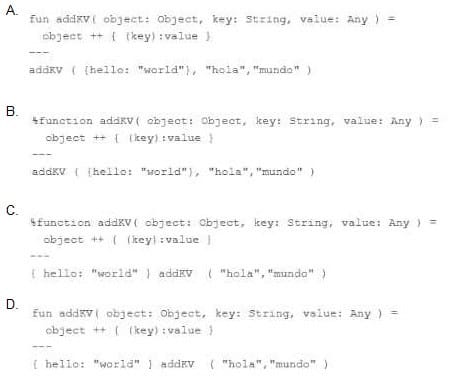
A. Option A
B. Option B
C. Option C
D. Option D
Refer to the exhibit.
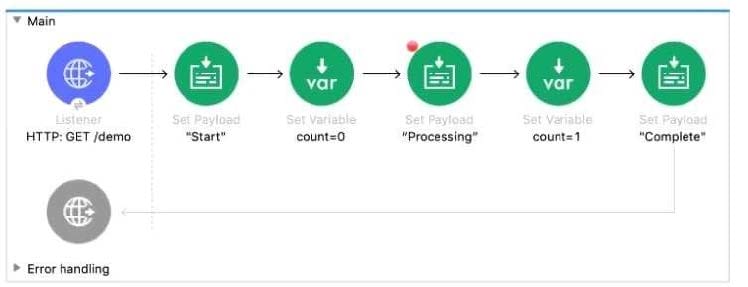
The Mule application Is debugged in Any point Studio and stops at the breakpoint What is the value of the payload displayed In the debugger at this breakpoint?
A. 0
B. "Processing"
C. "Start"
D. Complete"
Refer to the exhibit.
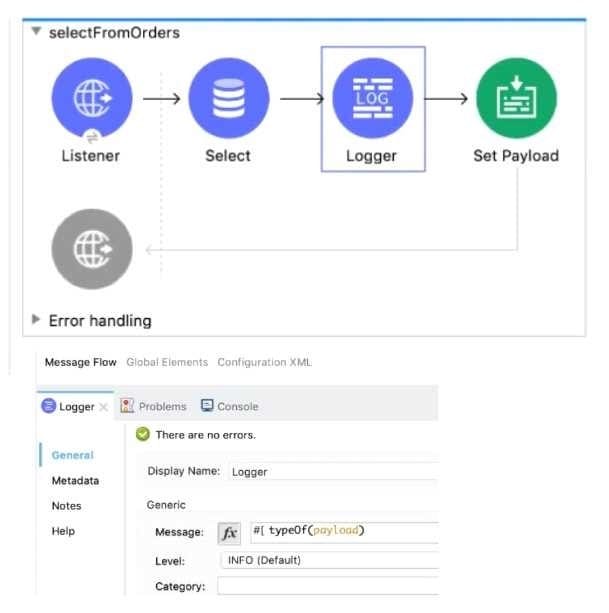
The Database Select operation returns five rows from a database. What is logged by the Logger component?
A. "Array"
B. "Object"
C. "LinkedHashMap"
D. "CaselnsensitrveHashMap"