
NSE5_FMG-5.4 Online Practice Questions and Answers
View the following exhibit:
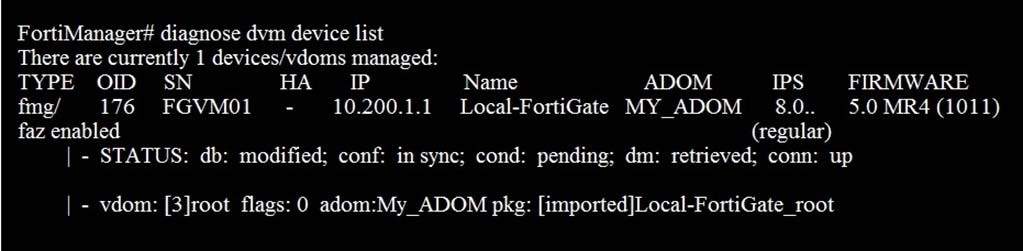
What of the following statements are true regarding the output? (Choose two.)
A. Configuration changes have been installed to FortiGate and represents FortiGate configuration has been changed.
B. The latest revision history for the managed FortiGate does match with the FortiGate running configuration.
C. The latest revision history for the managed FortiGate does not match with the device-level database.
D. Configuration changes directly made on the FortiGate have been automatically updated to device-level database.
View the following exhibit, which shows the Download Import Report:
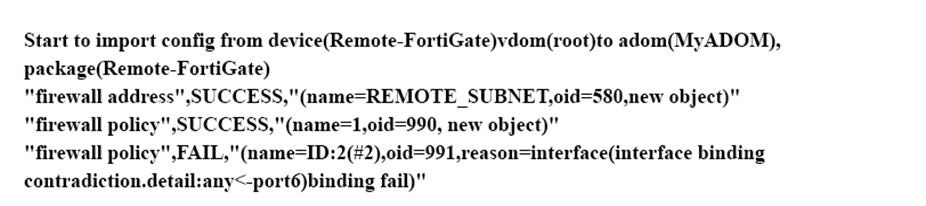
Why it is failing to import firewall policy ID 2?
A. The address object used in policy ID 2 already exist in ADOM database with any as interface association and conflicts with address object interface association locally on the FortiGate.
B. Policy ID 2 is configured from interface any to port6. FortiManager rejects to import this policy because any interface does not exist on FortiManager.
C. Policy ID 2 for this managed FortiGate already exists on FortiManager in policy package named Remote-FortiGate.
D. Policy ID 2 does not have ADOM Interface mapping configured on FortiManager.
View the following exhibit.
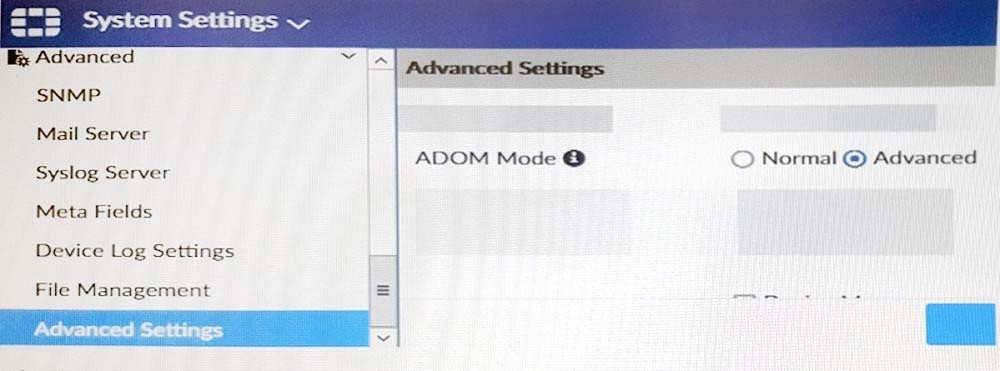
Which of the following statements are true based on this configuration setting? (Choose two.)
A. This setting will enable the ADOMs feature on FortiManager.
B. This setting is applied globally to all ADOMs.
C. This setting will allow assigning different VDOMs from the same FortiGate to different ADOMs.
D. This setting will allow automatic updates to the policy package configuration for a managed device.
View the following exhibit:
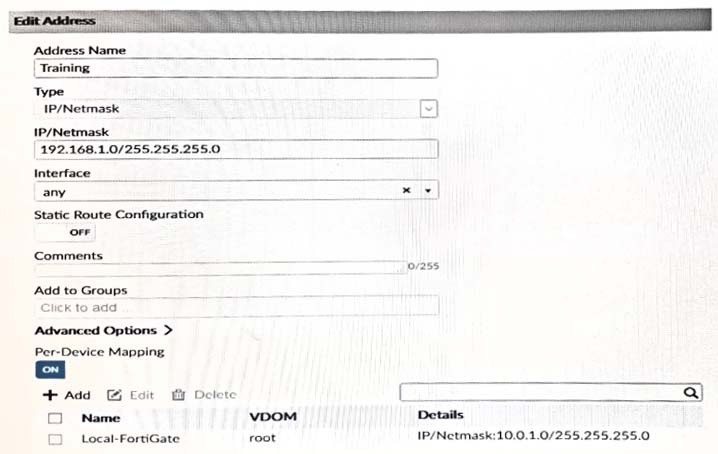
An administrator has created a firewall address object, Training, which is used in the Local-FortiGate policy package. When the install operation is performed, which IP/Netmask will be installed on the Local-FortiGate, for the Training firewall address object?
A. 192.168.0.1/24
B. It will create firewall address group on Local-FortiGate with 192.168.0.1/24 and 10.0.1.0/24 object values.
C. Local-FortiGate will automatically choose an IP/Netmask based on its network interface settings.
D. 10.0.1.0/24
An administrator has configured the following command on FortiManager:
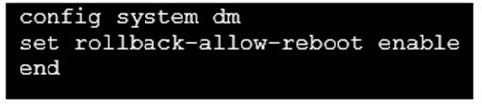
A configuration change has been installed from FortiManager to the managed FortiGate that causes the FGFM tunnel to go down for more than 15 minutes. What is the purpose of this command?
A. It allows FortiGate to reboot and recover the previous configuration from its configuration file.
B. It allows FortiGate to unset central management settings.
C. It allows the FortiManager to revert and install a previous configuration revision on the managed FortiGate.
D. It allows FortiGate to reboot and restore a previously working firmware image.
An administrator wants to delete an address object that is currently referenced in a firewall policy. Which one of the following statements is true?
A. FortiManager will replace the deleted address object with the all address object in the referenced firewall policy.
B. FortiManager will disable the status of the referenced firewall policy.
C. FortiManager will not allow the administrator to delete a referenced address object.
D. FortiManager will replace the deleted address object with the none address object in the referenced firewall policy.
An administrator is unable to log in to FortiManager. Which one of the following troubleshooting step should you take to resolve the issue?
A. Make sure FortiManager Access is enabled in the administrator profile.
B. Make sure ADOMs are enabled and the administrator has access to the Global ADOM.
C. Make sure Offline Mode is disabled.
D. Make sure the administrator IP address is part of the trusted hosts.
What configuration setting for FortiGate is part of a device-level database on FortiManager?
A. Routing
B. Security profiles
C. VIP and IP Pools
D. Firewall policies
What does the diagnose cdb check policy-assignment command do?
A. Fixes incorrect ADOM-level object references based on the firewall policies.
B. Internally upgrades existing ADOMs to the same ADOM version in order to clean up and correct the ADOM syntax.
C. Verifies and checks dynamic mappings, and removes invalid dynamic mappings.
D. Verifies and corrects global ADOM policy package assignments that have been disassociated from an ADOM.
An administrator has enabled Service Access on FortiManager. What is the purpose of Service Access on the FortiManager interface?
A. Allows FortiManager to run real-time debugs on the managed devices.
B. Allows FortiManager to respond to requests for FortiGuard services from FortiGate devices.
C. Allows FortiManager to automatically configure a default route.
D. Allows FortiManager to download IPS packages.