
OMG-OCUP-100 Online Practice Questions and Answers
Let us denote sending of p as !p and receiving p as ?p. Which traces define the interaction M in the exhibit? (Choose two)
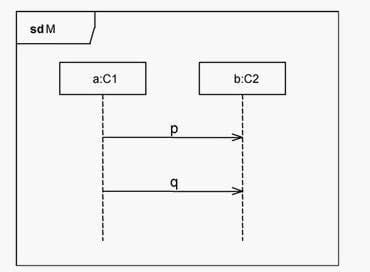
A.
B.
C.
D.
E.
When a message corresponds to an operation call, what is true about the arguments in UML 2.0?
A. Message arguments must always be constants or attributes of the sender.
B. All the parameters of the operation must be matched by message arguments.
C. A message argument should be of exactly the same type as the parameters of the corresponding operation.
D. The message arguments must the same type as the parameters of the corresponding operation or a subset of the parameters of the corresponding operation.
Which keyword denotes a lifeline that represents the object owning the lifeline?
A. own
B. self
C. this
D. object
E. ncloser?
In the exhibit, to which may it be attached?
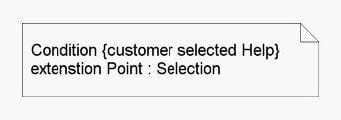
A. the subject that owns the extension
B. the use case that has extension points
C. the actor who initiated an extension use case
D. the association from an extension use case to its target
E. the association from an extension use case to its included use cases
What is the difference between the <
A. <
B. <
C. <
D. <
In the exhibit, there is one element with the identifier b. is true about this element?
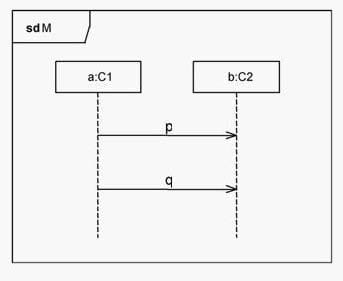
A. b is a class.
B. b is of the type C2.
C. b is defined local to M.
D. b is contained in class C2.
E. b must be a property of a composite structure.
In UML, what is the behavior of an object caused by?
A. a call
B. a trigger
C. an event
D. an operation
E. an event type
What shapes are NOT likely to be found on a typical use case diagram? (Choose two)
A. ovals
B. diamonds
C. stick figures
D. straight lines
E. square-cornered rectangles
F. rounded-cornered rectangles
Which icons are a standard representation for an actor? (Choose three) A. Option A
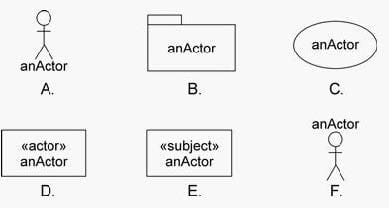
B. Option B
C. Option C
D. Option D
E. Option E
F. Option F
What is true about a <
A. defines communication between two model elements
B. specifies how one element implements another element
C. requires another element for its full implementation or operation
D. signifies granting of access rights from the supplier model element to the client model element
E. signifies granting of access rights from the client model element to the supplier model element