
QSDA2018 Online Practice Questions and Answers
A data architect uses the Qlik GeoAnalytics connector to determine the closest airports to cities in an existing app. The built location generates data for the airport locations. The data load editor runs the script and sees a circular reference and a synthetic key.
How should the data architect fix these issues?
A. When selecting an operation in the Qlik GeoAnalytics connector, select Only load distinct.
B. When choosing which data to load, uncheck the non-unique field in the new data tables.
C. Concatenate the airport table and the existing tables into one master tables.
D. When selecting an operation in the Qlik GeoAnalytics connector, change the CRS to "None".
Refer to the exhibits.
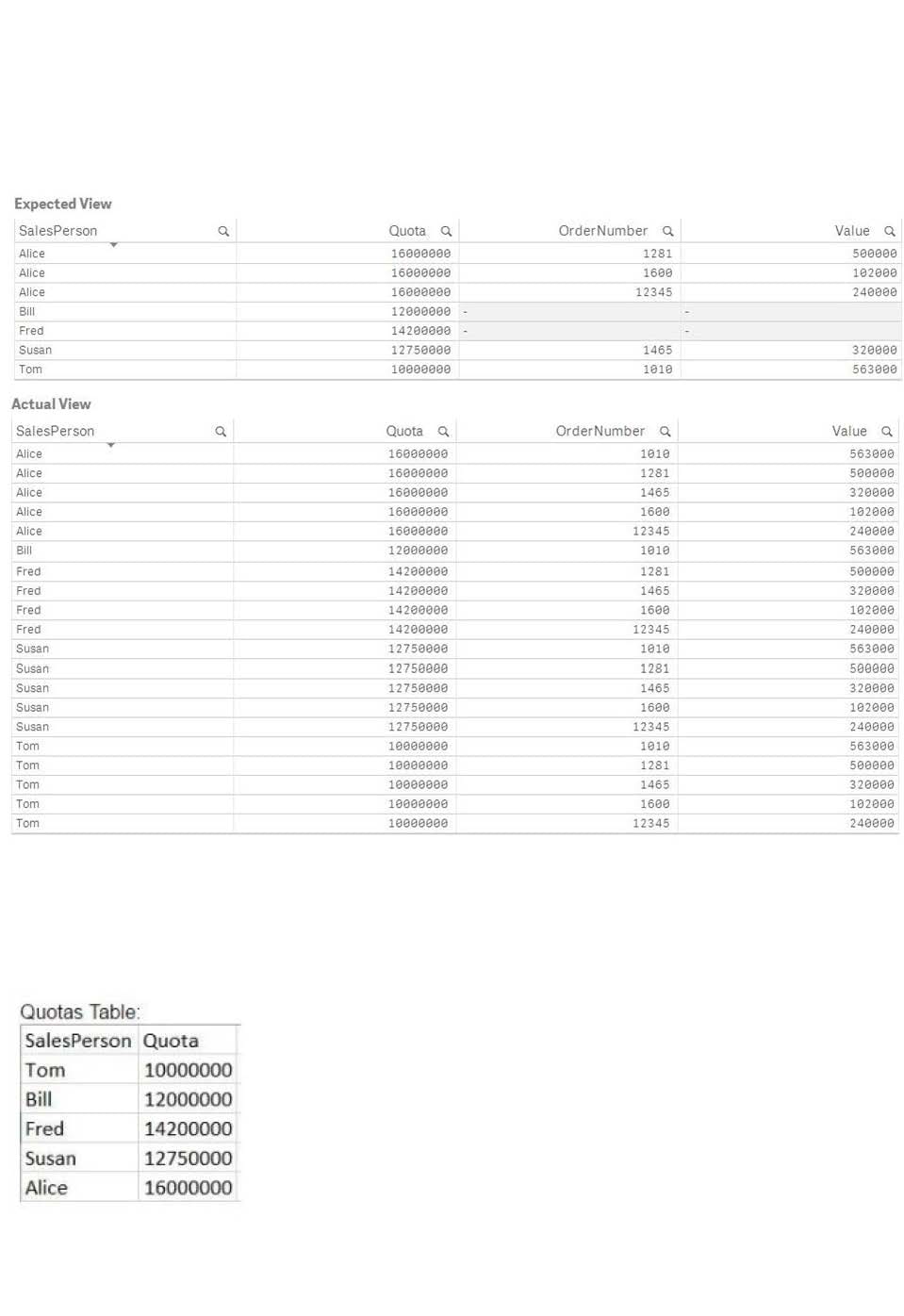
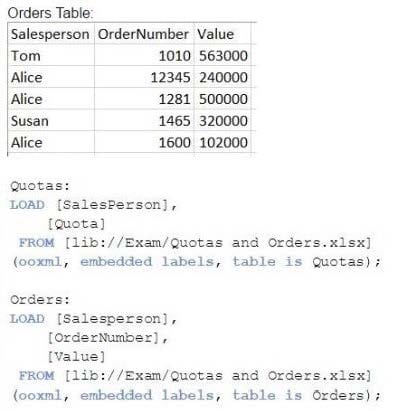
Which corrective action should be taken to achieve the expected view?
A. Alias one of the fields in the Orders table.
B. Use distinct in the LOAD statement.
C. Use Upper () to align the SalesPerson fields.
D. Add a link table.
An enterprise data warehouse contains 700 million records. This enterprise data warehouse has a three-tiered architecture and uses QVDs.
The Qlik Sense server contains 24 GB RAM and contains two processors with eight cores. The company needs to allow vendors to access a Qlik Sense app anonymously to review past business transactions and current year-to-date performance.
Which method should the data architect use to meet this requirement?
A. Build an On-Demand Application Generation template app and a selection app, and allow vendors to access anonymously.
B. Build an On-Demand Application Generation template app and a selection app, and require vendors to log into Qlik Sense to view the app.
C. Build a Direct Discovery app that enables users to view their individual content using dynamic QVDs.
D. Build a Direct Discovery app that enables users to view their individual content using Section Access.
Stocks levels are stored online in a system that keeps information for the current period only.
What should the data architect do to enable analysis of the trends of the stock levels?
A. Use On-Demand App Generation (ODAG) to create new apps from the selected period
B. Capture the periodic information in an incremental QVD file for use in an app
C. Create an app for each period as it changes and use document chaining
D. Create an app for each period and use a binary load task to create a single app
A data architect has a QVD file that contains data from many countries. The data architect must write a script that loads only data from France, and make sure the reload occurs as fast as possible.
Which script should the data architect use to meet these requirements?
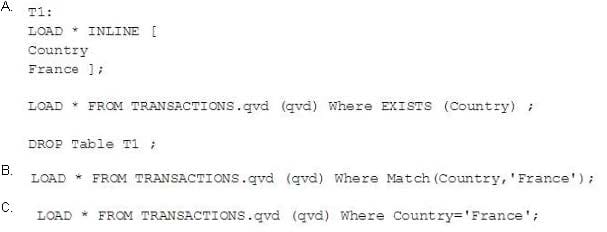
A. B. C.
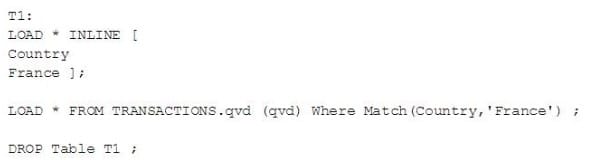
D.
A health system needs to analyze patient admission and discharges in a chart with a common date axis that looks like chart below.
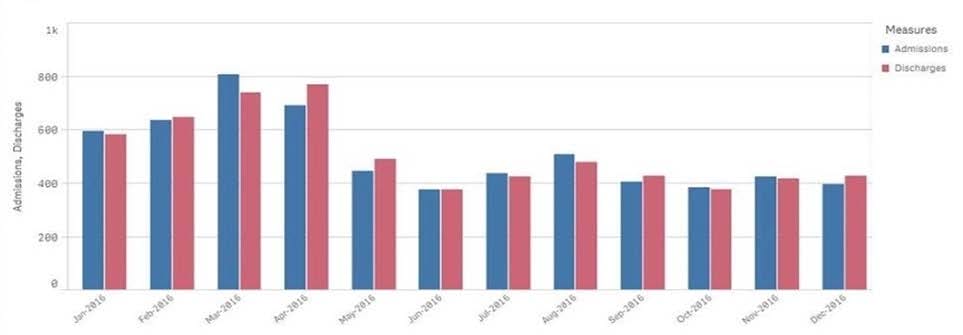
The initial date table (InpatientEncounters) contains a patient admission date and discharge date for each patient encounter. The data architect will use set analysis to calculate the number of admissions and discharges in the chart.
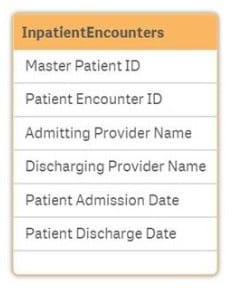
The data architect needs to design a data model with a minimum number of tables. Which tables should the data architect create to meet these requirements?
A. AdmissionCalendar, DischargeCalendar, and CommonCalendar
B. AdmissionCalendar and DischargeCalendar
C. DateLink, AdmisiionCalendar, and Dischange Calendar
D. DateLink and CommonCalendar
A data architect must break down a 13-character ShipmentID code in the following format, # ### ## ## #. Separate fields must be created from the numeric values separated by the hyphen (-). The data architect must extract five sub-fields (ShipmentLoc, Quantity, CategoryID, StoreLoc, and Division) from the 13character code.
How should the data architect meet this requirement?
A. In the data manager, use the data profiling card to replace the `-` characters in the ShipmentID
B. In the data load editor, load the ShipmentID field and apply the PurgeChar9ShipmentID,'-`) function
C. In the data manager, use the data profiling card to split the ShipmentID by the `-` character
D. In the data load editor, load the ShipmentID field and apply the KeepChar() and Trim() functions
Refer to the exhibits.
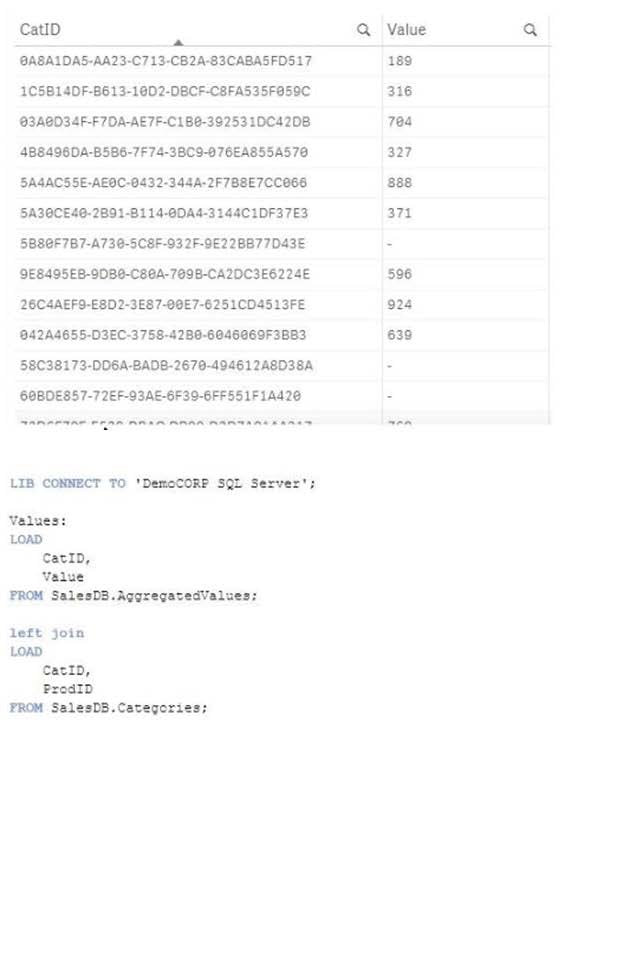
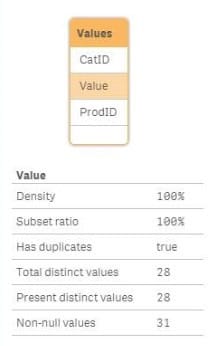
Business analytics report data issues in the Value field of a table since the latest reload of the data.
What causing this issue?
A. Null values in the source data
B. Hyphen characters (`-`) in the source data
C. Pre-aggregated data is being used
D. Some categories do NOT exist in the Category table
Refer to the exhibit.
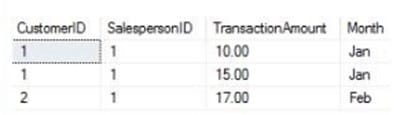
An organization stores sales data in SQL Server. A database administrator creates a view to show the transaction data. The data architect must:
Create a data model that shows the total sales for each salesperson by month
Create an indicator that shows whether the total monthly sales meet or exceed the monthly quota, which is always $1,200
Which script should the data architect use to meet these requirements?
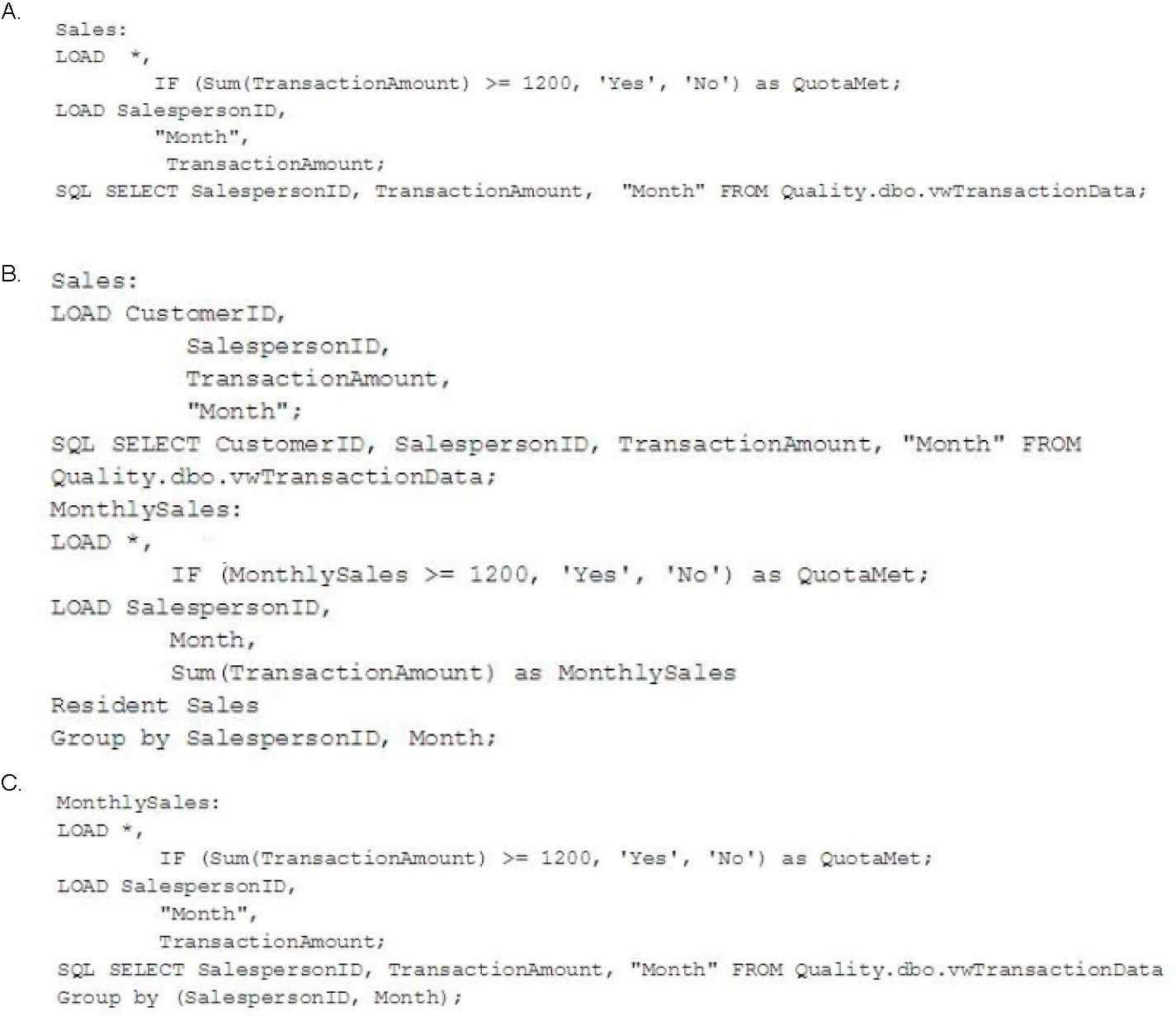
A. B. C.
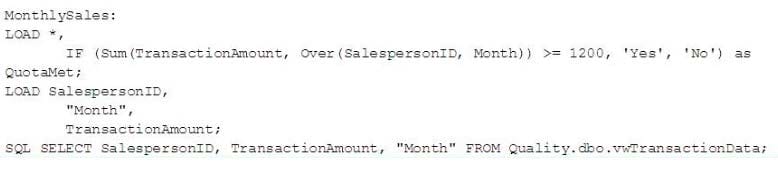
D.
Refer to the exhibit.
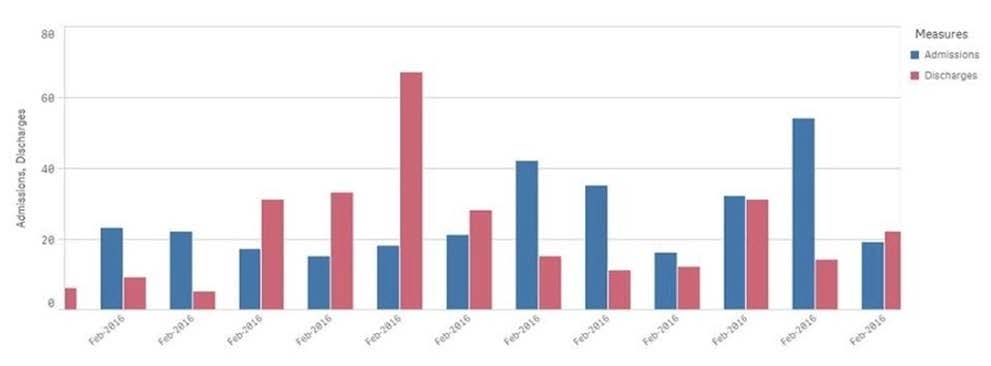
A chart for monthly hospital admissions and discharges incorrectly displays the month and year values on the x-axis. The date format for the source data field "Common date" is M/D/YYYY. This format was used in a calculated field named "Month-Year" in the data manager when the data model was first built.
Which expression should the data architect use to fix this issue?
A. Date (MonthsStart ([Common Date]), `MMM-YYY')
B. Date (MonthStart ([Common Date]), `MMM-YYY')
C. Date ([Common Date], `MMM-YYY')
D. Date (InMonth([Common Date]), MMM-YYYY')